
Short answer: A beginner choosing a cordless car polisher should verify the job, the box contents and the missing specifications before touching the paint. BufferKit lists a yellow eccentric polisher in a four-piece configuration with one battery and one charger, using a rechargeable lithium-battery power format. That is a useful starting point for a planned home session, but it does not confirm pads, backing plate, compound, instructions, runtime or battery capacity. Treat the first job as a small, controlled test rather than a promise to correct every panel. The product name alone cannot establish suitability for a particular vehicle or defect.
Choose the job before choosing the machine
Begin with the surface problem you can actually describe: dullness after washing, light marks, residue or a finish that needs closer inspection. A visible mark may be contamination, a surface defect or deeper damage. A machine polisher is not automatically the right response to every mark, especially when paint is peeling or the panel condition is uncertain.
A beginner also needs a workable space. Choose a clean, dry area with enough room to walk around the car and inspect one panel at a time. Keep the charger and battery away from water, loose metal items and places where they could be knocked over.
- Define one modest panel or test area.
- Check the paint in good light after washing and drying.
- Confirm which pad, backing plate and product are compatible.
- Decide how you will stop and inspect before continuing.
Read the yellow four-piece listing carefully
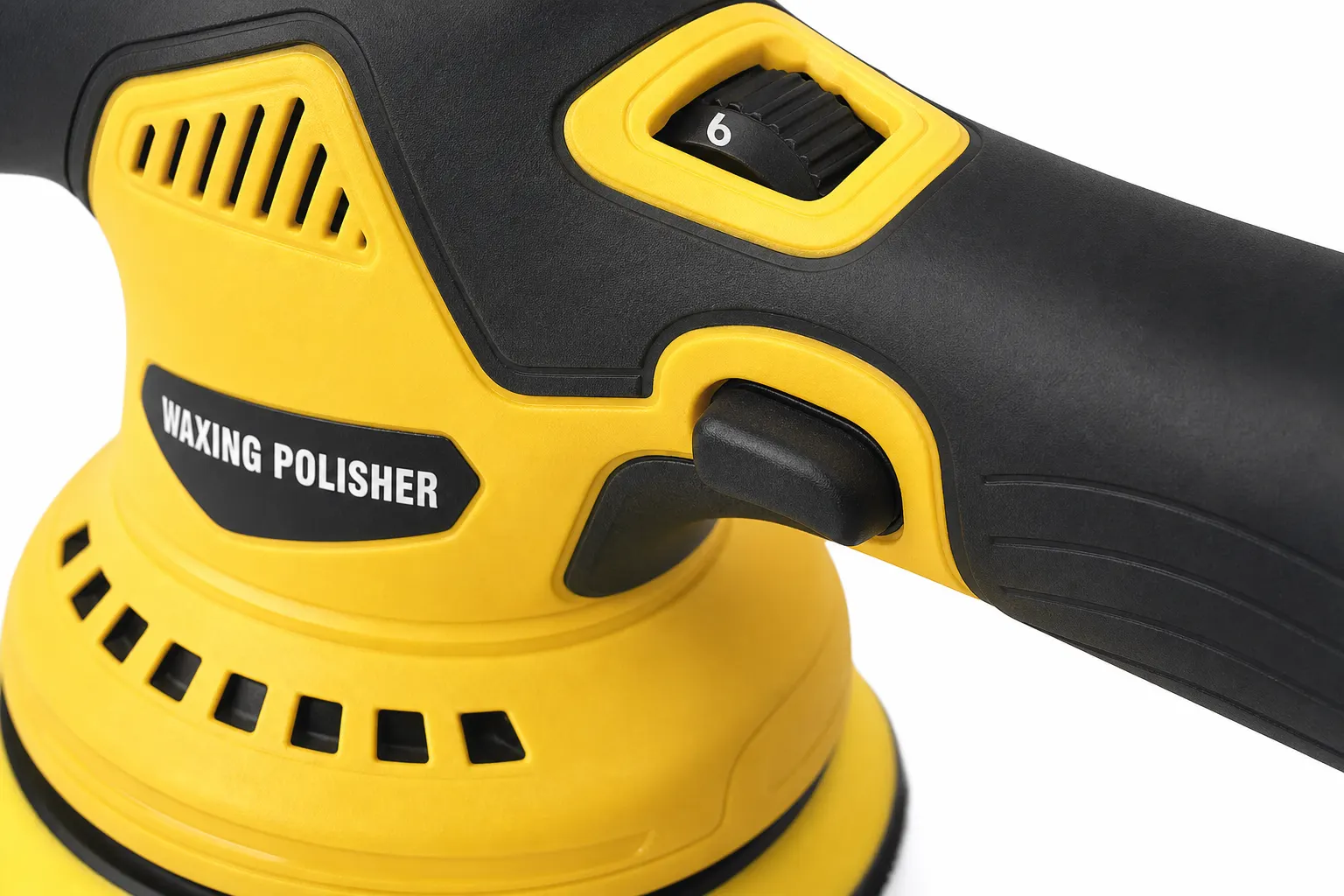
The product page names a yellow cordless eccentric polisher set with one battery. It describes an eccentric polishing mechanism and a rechargeable lithium-battery power format for the product series. The selected configuration is presented as four pieces and names one battery and one charger.
The manufacturer does not specify the remaining two pieces, pad diameter, backing-plate design, polish, compound, speed range, weight, noise or instructions. Do not assume a photograph or a similar marketplace title fills those gaps. Ask for a written contents list if a missing component affects your first session.
| Before purchase | What is confirmed | What remains open |
|---|---|---|
| Power | One battery and one charger | Capacity, charge time and runtime |
| Mechanism | Eccentric polishing mechanism | Speed controls and orbit data |
| Accessories | Four-piece configuration | Identity of the remaining two pieces |
Use a cautious first-session sequence
The first session should teach you how the tool, pad and product behave together on a small area. Use the instructions supplied for the exact machine and accessory. Keep the machine flat, use only the pressure the instructions allow and stop to inspect rather than trying to improve an uncertain result by pressing harder.
HSE identifies hand-arm vibration as a risk from hand-held power tools. The product page does not publish vibration data, so the manufacturer does not specify an exposure value for this set. Break the work into manageable periods and stop if your hands or arms feel numb, painful or unusually fatigued.
- Prepare and inspect one small test area.
- Fit only a confirmed compatible pad and product.
- Work gently according to the machine instructions.
- Wipe, inspect and decide whether the result justifies continuing.
Limits and checks before buying
A beginner should pause if the seller cannot confirm the remaining two pieces, the backing-plate arrangement or the operating instructions. The supplied battery and charger solve the basic power question but not the entire polishing workflow. The manufacturer does not specify a guaranteed finish on any paint system or a particular defect-removal capability.
If the battery will be charged at home, follow Fire Scotland guidance: use the manufacturer-approved charger, keep the charging area safe and avoid charging near flammable materials. A compact kit is easier to store, but storage still needs to follow the battery instructions.
Related guides and product details
For a first machine, buy only when the accessories and instructions support a small test session and the unknown battery limits fit your expectations. Read Cordless car polisher for driveway detailing UK: plan the work for related guidance. Read Cordless car polisher UK: check the product facts before choosing for related guidance. Review the documented specification on the Yellow cordless eccentric polisher set with one battery product page before ordering.
Sources and safety context
- Supports the product name, mechanism, power format and named kit contents. Yellow cordless eccentric polisher set with one battery details.
- Supports cautious planning around hand-held power-tool vibration. Hand-arm vibration.
- Supports safe charging and storage advice. Lithium-ion batteries.