
Short answer: When comparing a cordless car polisher in the UK, start with the job and then audit the listing. A useful product page should tell you the mechanism, power arrangement, contents and the limits that affect your session. BufferKit lists a yellow eccentric polisher with a rechargeable lithium-battery power format and a selected four-piece configuration containing one battery and one charger. It does not publish the battery capacity, runtime, speed range, pad size, weight or certification. Those omissions do not prove the tool is unsuitable; they mean a buyer should keep the decision inside the facts that are actually documented.
Begin with the work you need to do
A UK buyer might want a small home maintenance session, occasional paintwork on a daily car or a tool for repeated detailing. These are different demands. A compact driveway job may value movement and storage, while regular paid work may need published vibration, duty and accessory information.
Write the work down in plain terms before comparing models. Include the surface, the number of panels, the available space, the charging location and whether you need the box to contain consumables. This keeps the product name from doing the decision-making for you.
- Occasional home use or repeated professional use?
- Driveway, garage or fixed workshop?
- One test panel or several panels per session?
- Are compatible pads and a backing plate already available?
Read the BufferKit facts as a specification boundary
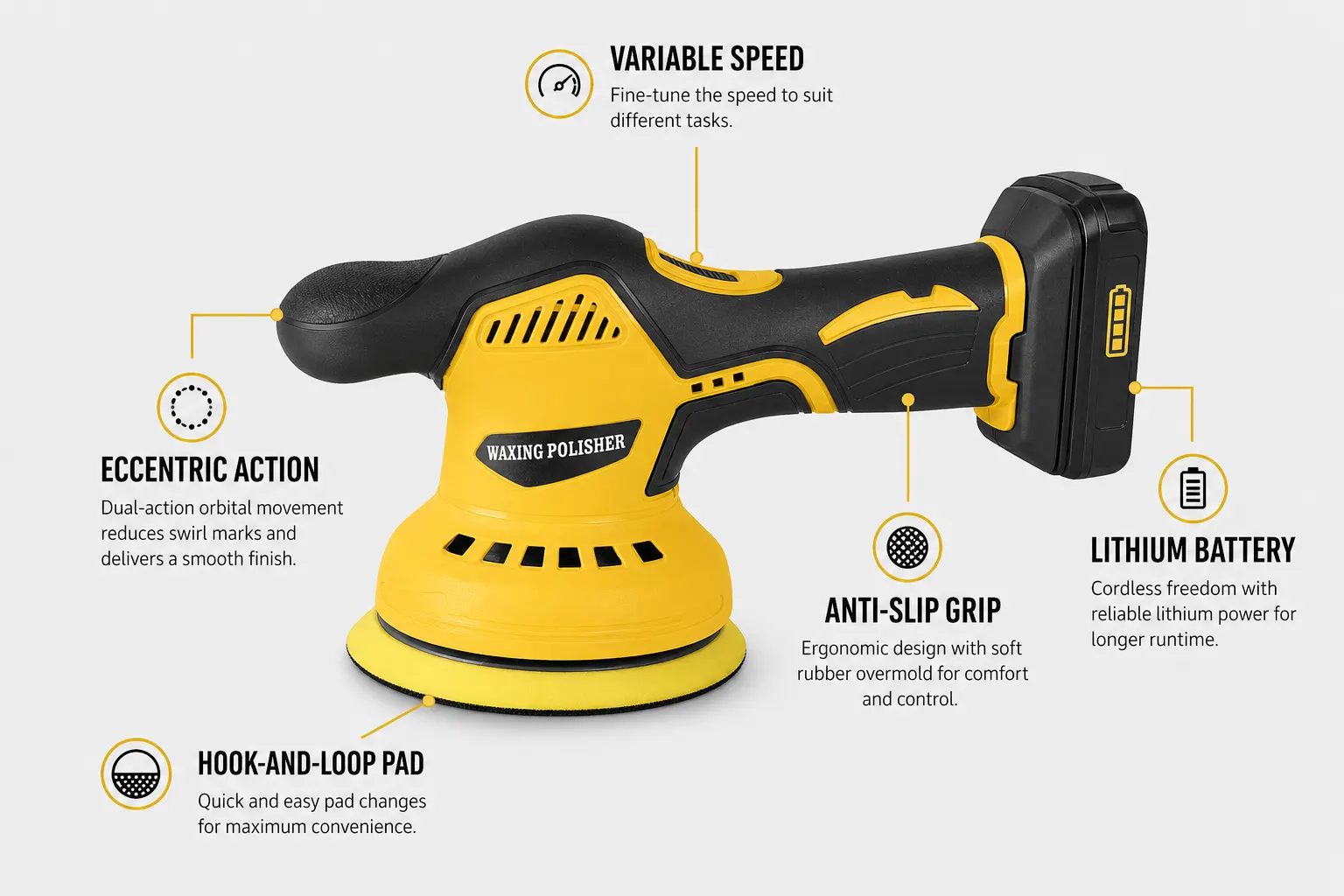
The product page names an eccentric polishing mechanism and a rechargeable lithium-battery power format for the product series. It presents the yellow configuration as a four-piece set with one battery and one charger and lists GBP 55.24 including VAT.
The manufacturer does not specify the battery capacity, runtime, charge time, speed settings, orbit size, pad diameter, backing plate, weight, noise, certification or the identity of the other two pieces. Do not turn product photographs, search snippets or unrelated marketplace descriptions into specifications for this listing.
| Field | Product page status |
|---|---|
| Mechanism | Eccentric polishing mechanism is named. |
| Power | Rechargeable lithium-battery format is named. |
| Power items | One battery and one charger are named. |
| Technical limits | Manufacturer does not specify runtime, capacity, speed or range. |
Check compatibility before checkout
A polisher is only useful when the pad, backing plate and polishing product work together. The product page does not identify every accessory in the four-piece set. Ask for the exact contents and confirm any separately purchased item against the tool, rather than relying on a colour match or a connector that looks similar.
Also confirm how the supplied battery and charger should be handled. Fire Scotland advises using the manufacturer-approved charger and charging in a safe area away from flammable materials. That is a practical check for home buyers, especially when the tool is stored in a garage or utility space.
- Match the exact product name and selected configuration.
- Request the identity of the two unnamed pieces.
- Confirm pad, backing-plate and charger compatibility.
- Only then compare price with another documented kit.
Limits and checks before buying
A cordless car polisher may suit a buyer who values movement around a parked car and accepts panel-by-panel work. It may be a poor match for anyone needing confirmed full-day runtime, a published technical sheet or a known professional accessory system. The manufacturer does not specify those outcomes for this listing.
For repeated use, include hand-arm vibration in your questions. HSE provides UK guidance because hand-held power tools can create hand-arm vibration exposure. Do not invent a vibration rating, certification or safe duration for the BufferKit product.
Related guides and product details
Choose the listed set only after its confirmed contents and unknown specifications fit the job you actually intend to perform. Read Cordless polisher for driveway detailing: a practical UK setup check for related guidance. Read DA vs rotary polisher for beginners UK: compare movement before buying for related guidance. Review the documented specification on the Yellow cordless eccentric polisher set with one battery product page before ordering.
Sources and safety context
- Supports the product facts and price. Yellow cordless eccentric polisher set with one battery details.
- Supports charger and charging-area safety advice. Lithium-ion batteries.
- Supports including vibration information in a repeated-use buying check. Hand-arm vibration.